
First Year Engineering Department
The foundational year for all undergraduate engineering students at DVCOE — building strong fundamentals before specialization.
About the FE Department
The First-Year Engineering Department marks the beginning of every engineer's academic journey — a foundational platform where curiosity meets clarity and potential begins to take shape. As the cornerstone of technical education, this department bridges the gap between pure sciences and specialized engineering disciplines, laying down the essential principles upon which future innovations are built.
Serving as the entry point for all undergraduate engineering programs, the department delivers a thoughtfully structured curriculum that includes core subjects such as Engineering Mathematics, Physics, Chemistry, Basic Electrical & Electronics Engineering, Engineering Drawing, Engineering Mechanics, Civil & Mechanical Engineering Fundamentals, Workshop Practices, and Computer Programming. Each course is designed not only to build academic rigor but also to cultivate problem-solving skills and a multidisciplinary outlook.
The department is enriched with well-equipped laboratories, an advanced computer centre, a language lab to enhance communication skills, and a modern workshop that brings theoretical concepts to life through hands-on experience. These facilities ensure that students are grounded in both knowledge and practical competence from the very start.
At the heart of the First-Year Department lies a vision — to inspire, to empower, and to prepare students to confidently step into their respective engineering streams. With a commitment to academic excellence and adaptability to emerging global trends, we strive to nurture well-rounded individuals ready to lead, create, and transform the world through engineering.
Program Outcomes
Engineering Graduates will be able to —
Engineering knowledge
Apply the knowledge of mathematics, science, engineering fundamentals, and an engineering specialization to the solution of complex engineering problems.
Problem analysis
Identify, formulate, review research literature, and analyze complex engineering problems reaching substantiated conclusions using first principles of mathematics, natural sciences, and engineering sciences.
Design/development of solutions
Design solutions for complex engineering problems and design system components or processes that meet the specified needs with appropriate consideration for the public health and safety, and the cultural, societal, and environmental considerations.
Conduct investigations of complex problems
Use research-based knowledge and research methods including design of experiments, analysis and interpretation of data, and synthesis of the information to provide valid conclusions.
Modern tool usage
Create, select, and apply appropriate techniques, resources, and modern engineering and IT tools including prediction and modeling to complex engineering activities with an understanding of the limitations.
The engineer and society
Apply reasoning informed by the contextual knowledge to assess societal, health, safety, legal and cultural issues and the consequent responsibilities relevant to the professional engineering practice.
Environment and sustainability
Understand the impact of the professional engineering solutions in societal and environmental contexts, and demonstrate the knowledge of, and need for sustainable development.
Ethics
Apply ethical principles and commit to professional ethics and responsibilities and norms of the engineering practice.
Individual and team work
Function effectively as an individual, and as a member or leader in diverse teams, and in multidisciplinary settings.
Communication
Communicate effectively on complex engineering activities with the engineering community and with society at large, such as, being able to comprehend and write effective reports and design documentation, make effective presentations, and give and receive clear instructions.
Project management and finance
Demonstrate knowledge and understanding of the engineering and management principles and apply these to one's own work, as a member and leader in a team, to manage projects and in multidisciplinary environments.
Life-long learning
Recognize the need for, and have the preparation and ability to engage in independent and life-long learning in the broadest context of technological change.
Program Educational Objectives
Graduates will be able to —
- 1
Equip graduates with a strong foundation in engineering sciences & allied discipline fundamentals to become effective collaborators, researchers and real-time problem solvers with technical competencies.
- 2
Perceive the limitation and impact of engineering solutions in social, legal, environmental, economical and multidisciplinary contexts.
- 3
Excel in Industry/technical profession, higher studies, and entrepreneurship exhibiting global competitiveness.
Program Specific Outcomes (PSOs)
- 1
Apply basic knowledge related to the discipline to solve engineering/societal problems.
- 2
Recognize and adapt to technical developments and to engage in lifelong learning and develop consciousness for professional, social, legal and ethical responsibilities.
- 3
Excellent adaptability to the changing industrial and real world requirements.
From the HOD's Desk
Head of Department
Dr. Mukund Kharde
First Year Engineering — DVCOE
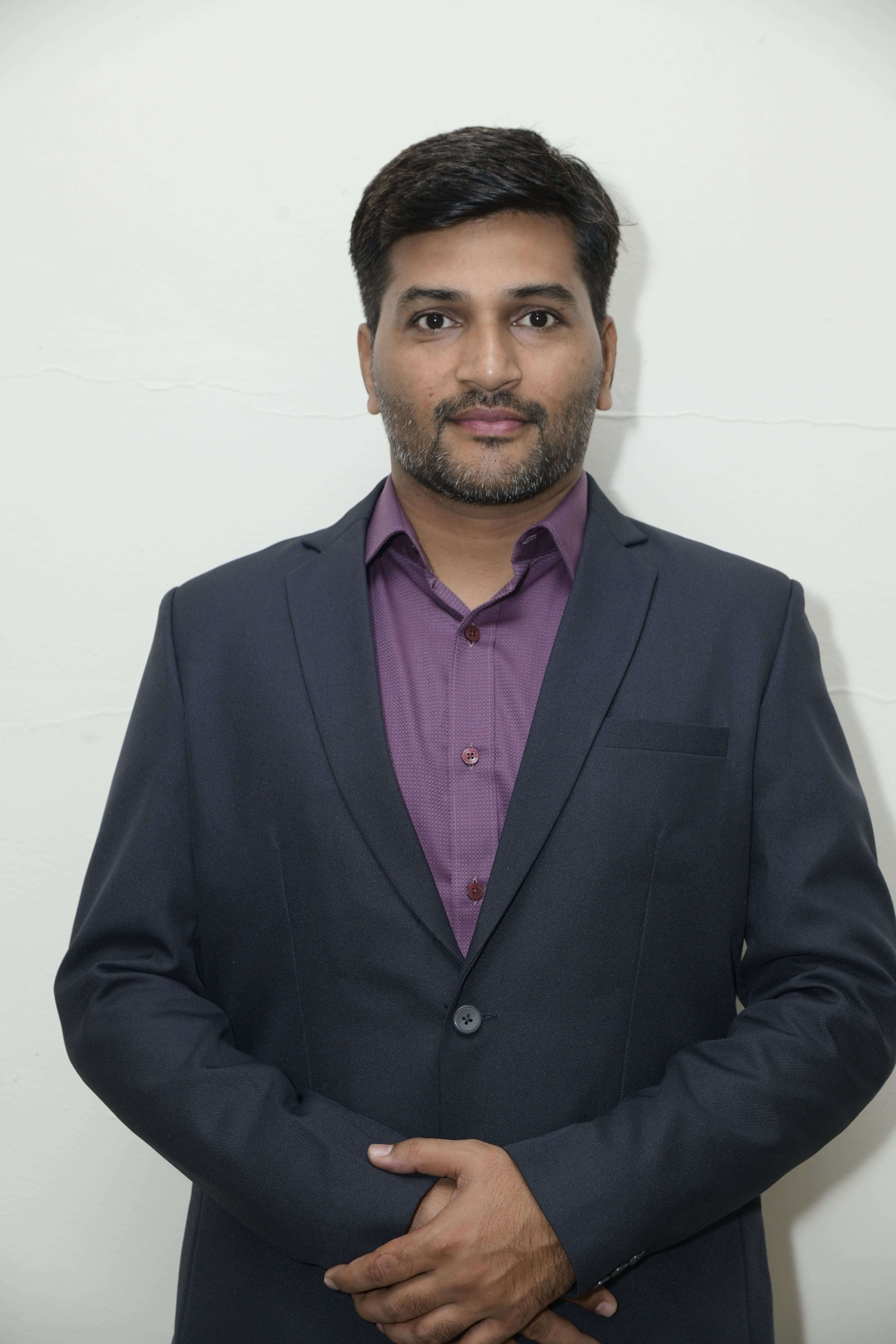
Dear Students and Parents,
It gives me immense pleasure to welcome you to the First-Year Engineering Department, the foundational pillar of your academic journey at our esteemed institution.
The first year of engineering is not just the beginning of a professional course — it is the start of a transformational journey where young minds evolve into future engineers, innovators, and leaders. At this crucial stage, our mission is to build a strong academic and ethical base that supports students throughout their specialization and beyond.
Our department focuses on imparting core knowledge in essential subjects such as Mathematics, Physics, Chemistry, Engineering Mechanics, Engineering Drawing, Basic Electrical and Electronics, Civil & Mechanical Engineering, Programming, and Workshop Practices. With a balanced blend of theoretical learning and practical exposure, we ensure that students grasp fundamental concepts that are critical across all branches of engineering.
We are proud to offer a vibrant learning environment enriched by well-equipped laboratories, a modern computer center, a dedicated language lab, and a fully functional workshop — all guided by a team of experienced, passionate, and student-focused faculty members.
We also place strong emphasis on holistic development. Through various co-curricular activities, mentoring programs, and soft skills training, we aim to groom our students into confident, responsible, and industry-ready professionals.
At the First-Year Engineering Department, we don't just teach subjects — we nurture curiosity, build character, and lay the foundation for lifelong learning.
Wishing all our students a successful and enriching journey ahead.
Warm regards,
Faculty Details
Click on a name to visit their personal webpage.
Faculty details will appear here once added.
Infrastructure & Facilities
Classrooms, laboratories, workshop and library.
Infrastructure photos will appear here once added.
Academic Calendar
Click to view the calendar for AY 2025-26.
Syllabus
Foreign Language
German & Japanese language training for global career opportunities.
At our institute, we recognize the growing importance of global competencies in the engineering profession. To empower our students with a global perspective and enhanced career prospects, we offer foreign language training in German and Japanese — two of the most influential languages in the fields of science, technology, and industrial innovation.
Why Learn Japanese?
Japan is a global leader in robotics, electronics, automobile engineering, AI, and advanced manufacturing. Companies like Toyota, Honda, Mitsubishi, Sony, Panasonic, and Hitachi actively seek professionals who can bridge the communication gap and work within culturally nuanced, team-oriented environments.
Learning Japanese gives students a pathway to career opportunities in Japan, especially through government-backed programs such as JET and corporate-sponsored internships. Japan is also investing in collaborative R&D with India, creating a rising demand for engineers familiar with Japanese language and practices.
Why Learn German?
Germany is a leader in mechanical engineering, automotive technology, renewable energy and industrial automation. Companies such as BMW, Siemens, Bosch, Volkswagen, Mercedes-Benz and SAP actively seek engineering graduates who can collaborate in cross-cultural environments.
Germany also offers numerous fully funded master's programs and technical internships for international students. Many programs are conducted in English but give preference to applicants with a German-language background.
A Global Edge for Our Students
By integrating German and Japanese language learning into our curriculum, we aim to prepare our students not just for domestic careers but for a global engineering landscape — international higher education, research fellowships, internships and job placements in leading multinational corporations. Mastering a foreign language fosters cross-cultural sensitivity, cognitive flexibility and communication skills, all of which are vital for engineers in today's globalized workforce.
Department Events
Recent activities and student-led initiatives.
Department events will appear here once added.